Category: Technology

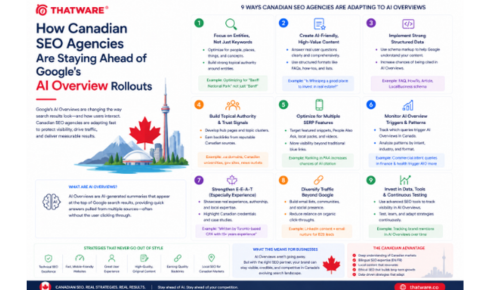
  • How Canadian SEO Agencies Are Staying Ahead of Google’s AI Overview Rollouts

    How Canadian SEO Agencies Are Staying Ahead of Google’s AI Overview Rollouts

    Canada has been an interesting market to watch during Google’s AI Overview rollout — partly because the rollout happened in waves that affected Canadian search results differently than US results, and partly because Canadian SEO practitioners have had to develop specific approaches to a shift that’s reshaping how organic search traffic flows in every market it touches.

    The agencies that have navigated this well share some common characteristics. They saw the shift coming. They adapted their client strategies before the traffic impact became undeniable. And they’ve developed specific methodologies for the AI Overview era that go beyond what worked in the pre-AI-Overview search landscape.

    Here’s what those adaptations look like.

    Understanding What Changed for Canadian Search

    AI Overviews appeared in Canadian Google search results beginning in 2024 and have expanded significantly since. The categories of queries most affected align broadly with what’s been observed in the US market: informational queries, research-phase commercial queries, comparison queries, and question-format searches.

    For Canadian SEO specifically, there are some nuances worth noting. Canadian Google search has historically had somewhat different results from US search, reflecting different local signals, different content availability, and different competitive landscapes. The AI Overview rollout has increased the degree to which Canadian search surfaces synthesised answers that draw from global sources — meaning Canadian-specific content has had to become more explicitly positioned to compete for inclusion in AI-generated answers that draw from a broader international pool.

    The bilingual dimension of Canadian search adds complexity. French-language AI Overviews in Quebec behave somewhat differently from English-language ones, and the content standards required for AI inclusion in French-language search have required specific attention from agencies serving Quebec markets.

    The Traffic Impact Analysis

    The most immediate practical challenge for Canadian SEO agencies following the AI Overview rollout has been honestly accounting for the traffic impact in client reporting and strategy.

    Organic sessions from informational queries have declined for many Canadian clients, as AI Overviews intercept searches that would previously have resulted in clicks to organic results. This decline is real, measurable, and in some categories significant.

    The agencies that have handled this well have been transparent with clients about what’s happening, connected the traffic change to the broader shift in search behaviour, and pivoted the strategy conversation from “how do we get more traffic” to “how do we ensure we’re visible and cited in AI-generated answers as well as traditional organic results.”

    Seo agency canada operations that tried to explain declining informational traffic as a temporary fluctuation or a technical issue have lost client trust when the pattern persisted. The ones that provided clear, honest analysis of what was driving the change, and proposed concrete responses, have strengthened their positioning as strategic advisors rather than tactical implementers.

    The Content Architecture Response

    The content strategy response to AI Overviews in Canadian markets has involved a specific shift in how content is structured and what questions it’s designed to answer.

    Content for AI Overview inclusion requires: clear, direct answers to specific questions at the beginning of the content (not buried in the middle); accurate, well-attributed factual claims; a clearly established credibility context; and structured data that communicates the content’s topical relevance to answer engines.

    Many Canadian businesses had content libraries built for the previous search paradigm — comprehensive, SEO-optimised long-form content that was well-suited to the traditional ranked result model. Adapting this content for AI Overview inclusion has been one of the primary content strategy activities for best seo agency canada operations over the past twelve months.

    This isn’t replacing the existing content architecture — it’s augmenting it. Adding clear question-and-answer sections to existing comprehensive content, restructuring introductions to lead with direct answers, and adding FAQ schema markup to appropriate pages. The combination of comprehensive content (which still drives traditional ranking performance) and AI-Overview-optimised content architecture (which supports inclusion in AI-generated answers) serves both paradigms simultaneously.

    Entity and Authority Building for AI Inclusion

    One of the clearest signals from observing which brands appear consistently in Canadian AI Overviews is that entity recognition and authority signals matter significantly — in some ways more than traditional link-based authority.

    Brands that are well-established as entities in Google’s Knowledge Graph, that have comprehensive and accurate structured information across authoritative sources, and that have earned editorial citations from high-quality Canadian and international sources appear more consistently in AI Overview responses for relevant queries.

    The practical implication for Canadian agencies has been incorporating entity optimisation — Knowledge Graph management, Wikipedia and Wikidata presence, consistent entity information across authoritative directories — into standard strategy rather than treating it as an advanced or optional layer.

    Canadian businesses that have invested in this entity infrastructure are finding it pays dividends both in AI Overview visibility and in traditional search, where entity recognition has been an increasingly significant ranking signal.

    Measurement Adaptation

    The measurement frameworks that Canadian agencies have adapted for the AI Overview era reflect the need to measure a broader picture of organic visibility than traditional rank tracking provides.

    Adding AI Overview appearance monitoring to the standard measurement stack — systematic auditing of which queries trigger AI Overviews and whether client content is cited — has become standard practice for the agencies doing this well.

    Share of voice in AI-generated answers, tracked manually through query sampling and increasingly through emerging tool integrations, is becoming a performance indicator that sits alongside traditional ranking and traffic metrics.

    The agencies that have invested in building this expanded measurement capability can have genuinely better strategic conversations with their clients — demonstrating not just where they’re visible in traditional search but where they are and aren’t visible in the AI-mediated search experiences that are capturing a growing proportion of search interactions.

    Looking Forward

    The Canadian market will continue to be shaped by the AI Overview rollout as Google extends coverage to more query categories and refines the content quality signals that determine AI inclusion.

    The agencies that will navigate this best are the ones treating it as a sustained strategic evolution rather than a one-time adaptation. The fundamental principles — building genuine topical authority, producing content that directly and accurately answers user questions, establishing strong entity representation — are durable across search paradigms. The specific implementation adapts as the landscape evolves.

    For Canadian businesses working with SEO agencies, the right question to ask is not “how are you dealing with AI Overviews” but “how has your strategy evolved in response to the changes in Canadian search over the past twelve months?” The quality of the answer reveals whether the agency is genuinely staying ahead of the shift or simply reacting to it.


     

  • Rain Detector: Enhance Safety and Innovation with an Electric Bike Motor

    Rain Detector: Enhance Safety and Innovation with an Electric Bike Motor

    In the world of electronics and modern transportation, integrating technology for safety and efficiency has become crucial. A rain detector is a practical project that allows students and hobbyists to learn about sensors, circuits, and automation, while an electric bike motor demonstrates the application of motors in modern mobility solutions. Combining these components in hands-on projects can provide both educational value and practical knowledge, making learning interactive, engaging, and meaningful.

    A rain detector is designed to sense the presence of water and trigger a response, such as activating a wiper system, sending an alert, or turning off electrical devices. This type of project introduces learners to the fundamentals of sensors, voltage changes, and signal processing. By building a rain detector circuit, students gain practical experience in electronics, develop problem-solving skills, and understand how environmental inputs can be converted into actionable responses in real-world systems.

    Electric bike motors play a crucial role in modern electric vehicles. These motors convert electrical energy into mechanical motion, propelling the bike with efficiency and speed. By experimenting with an electric bike motor, students and hobbyists can learn about torque, speed control, battery efficiency, and motor management. Integrating an electric bike motor into projects also demonstrates the application of electronics in sustainable transportation, which is increasingly relevant in today’s eco-conscious world.

    One of the key advantages of working with rain detectors is the opportunity to understand automated systems. These detectors are widely used in industrial applications, smart homes, and automobiles. Students can design circuits where the sensor automatically activates devices when it detects rain, providing a clear understanding of automation principles. Combining this with electric bike motor projects allows learners to explore safety features, such as halting or slowing the bike in wet conditions, simulating real-world applications of technology.

    Electric bike motors and rain detectors are ideal for STEM (Science, Technology, Engineering, and Mathematics) learning. Projects involving these components encourage experimentation, critical thinking, and analytical skills. For instance, students may design a rain-sensitive braking system for an electric bike, learning how sensors, circuits, and motors can work together to enhance safety. This hands-on experience bridges the gap between theory and practical application, making STEM education both exciting and impactful.

    Using a rain detector in electronics projects also teaches students about component selection, circuit design, and signal calibration. Understanding how to integrate sensors into a larger system is a valuable skill in robotics, automotive engineering, and home automation. Similarly, experimenting with an electric bike motor provides insight into motor controllers, battery management systems, and speed regulation, offering a comprehensive learning experience.

    Safety and convenience are additional benefits of these projects. Kits and modules designed for educational purposes come with pre-selected components, clear instructions, and safety measures. Beginners can start with basic circuits and small motors, while advanced learners can design complex systems that combine sensors, motors, and microcontrollers. This structured approach ensures learners remain engaged and confident throughout their experimentation.

    Collaboration and creativity are also encouraged when working on such projects. Students often work in teams, share ideas, and troubleshoot problems together, enhancing communication and teamwork skills. Completing a functional project, such as a rain detector-integrated electric bike system, provides a sense of accomplishment and motivates learners to explore more advanced experiments in electronics and sustainable transportation.

    In conclusion, a rain detector paired with an electric bike motor provides an engaging and practical approach to learning about electronics, automation, and motor systems. These projects promote critical thinking, problem-solving, and STEM education while offering real-world applications that enhance safety and innovation. Whether for school projects, hobby experiments, or advanced learning, combining these components inspires curiosity, creativity, and practical technical skills.

  • Why Activating with a Code Matters for Peacock TV

    Why Activating with a Code Matters for Peacock TV

    Peacock TV, NBCUniversal’s streaming service, has rapidly grown in popularity due to its vast library of movies, TV shows, live sports, and original content. One of the key aspects of Peacock’s distribution strategy is its partnership with internet service providers (ISPs), cable companies, and other third-party services that offer Peacock TV activation codes. These codes allow users to unlock premium content, often for free or at a discounted rate, by linking their accounts through Peacock TV’s activation website.

    Activating Peacock TV with a code is not just a technical step—it plays a crucial role in user acquisition, retention, monetization, and partnerships. This article explores why activation codes matter for Peacock TV, covering aspects such as business growth, user experience, security, and competitive advantage.

    You May Also Like- Peacock : Start Streaming Today with This Simple Login Guide Visit :  Peacocktv.com/tv

    1. Driving Subscription Growth Through Partnerships

    Peacock TV collaborates with various service providers, including:

    • Internet Service Providers (ISPs) like Xfinity, Spectrum, and Cox
    • Mobile carriers such as Verizon
    • Retail and promotional partners offering free trials

    These partnerships allow Peacock to reach millions of potential subscribers who might not have signed up otherwise. By providing activation codes, Peacock incentivizes users to try the service without an upfront payment, increasing adoption rates.

    Benefits for Peacock:

    • Expands customer base without heavy marketing costs.
    • Leverages existing customer relationships of partner companies.
    • Encourages long-term subscriptions after free trials expire.

    2. Enhancing User Experience with Seamless Access

    Activation codes simplify the onboarding process for users. Instead of entering payment details immediately, they can:

    1. Visit Peacock TV’s activation page.
    2. Enter the code from their ISP or promotional offer.
    3. Instantly access content without credit card requirements.

    This frictionless entry improves user satisfaction and reduces drop-off rates during sign-up.

    Why This Matters:

    • Reduces barriers to entry – Users hesitant to subscribe may try Peacock risk-free.
    • Streamlines access – No need for manual account creation if linked through a provider.
    • Improves retention – A positive first experience increases the likelihood of conversion to paid plans.

    3. Monetization and Upselling Opportunities

    While many activation codes offer free access (e.g., Xfinity users get Peacock Premium at no cost), Peacock uses this strategy to:

    • Convert free users to paid subscribers by showcasing premium content.
    • Upsell ad-free tiers (Peacock Premium Plus).
    • Retain users through exclusive content (e.g., Premier League, WWE, and original series).

    Business Impact:

    • Freemium model success – Free users often upgrade after experiencing the service.
    • Higher lifetime value (LTV) – Partnerships drive long-term revenue.
    • Ad-supported revenue – Even free users contribute through ads.

    4. Strengthening Security and Reducing Fraud

    Activation codes help Peacock TV:

    • Verify legitimate users (e.g., only Xfinity customers can use Xfinity-linked codes).
    • Prevent account sharing by tying access to a specific provider.
    • Reduce fraudulent sign-ups since codes are distributed through trusted partners.

    Security Advantages:

    • Controlled access – Limits abuse of free trials.
    • Better analytics – Tracks which partners drive the most activations.
    • Compliance with licensing agreements – Ensures only eligible users access content.
    You May Also Like- Peacock : Start Streaming Today with This Simple Login Guide Visit :  Peacocktv.com/tv

    5. Competitive Edge in the Streaming Wars

    The streaming market is crowded, with Netflix, Disney+, HBO Max, and Paramount+ competing for subscribers. Peacock’s activation code strategy helps it stand out by:

    • Offering unique bundles (e.g., Xfinity internet + free Peacock).
    • Leveraging NBCUniversal’s media empire (e.g., Bravo, NBC Sports, Universal Pictures).
    • Providing flexible access models (free, premium, and ad-free tiers).

    Why It Works:

    • Differentiates from competitors who rely solely on direct subscriptions.
    • Attracts cord-cutters by integrating with ISP packages.
    • Encourages loyalty through exclusive partner benefits.

    6. Data Collection and Personalized Marketing

    When users activate Peacock TV via a code, the platform gains valuable data, such as:

    • Demographics (from partner providers).
    • Viewing habits (helping tailor recommendations).
    • Engagement metrics (which content keeps users subscribed).

    Marketing Benefits:

    • Targeted promotions – Sends personalized offers based on usage.
    • Improved content strategy – Invests in shows that retain users.
    • Higher conversion rates – Data-driven campaigns perform better.

    7. Encouraging Long-Term Customer Loyalty

    Activation codes are not just for acquisition—they help retain users by:

    • Offering extended trials (e.g., 90-day free access).
    • Providing exclusive perks (early access to sports events).
    • Bundling with other services (e.g., Sky TV in the UK).

    Retention Strategies:

    • Reduces churn – Users who activate via partners stay longer.
    • Increases engagement – More touchpoints with the brand.
    • Builds brand affinity – Positive experiences lead to word-of-mouth growth.
    You May Also Like- Max : Start Streaming Today with This Simple Login Guide Visit :  Max.com/providers

    Conclusion

    Peacock TV’s activation code system is a smart, multi-faceted strategy that drives growth, enhances security, improves user experience, and strengthens partnerships. By leveraging codes from ISPs, mobile carriers, and promotions, Peacock expands its reach while minimizing subscriber acquisition costs. Additionally, the data collected from activated users helps refine marketing and content strategies, ensuring long-term success in the competitive streaming landscape.

    For users, activation codes mean easy, risk-free access to premium content. For Peacock, they represent a scalable, profitable, and secure way to grow in the streaming wars. As the platform continues to evolve, activation codes will remain a key pillar of its business model.

  • How to Ensure Scalability and Stability in Micropayment Systems Using Cloud Infrastructure

    How to Ensure Scalability and Stability in Micropayment Systems Using Cloud Infrastructure

    1. Setting the Scene

    In a world where convenience drives digital innovation, micropayments—small-value transactions usually below $10—have become essential for mobile apps, digital subscriptions, gaming, and pay-per-use content. However, with surging demand, the pressure is on: how do service providers support millions of these tiny transactions efficiently without compromising reliability?

    Enter the cloud.

    Cloud-based micropayment infrastructures offer a path forward, promising elastic scaling, fault tolerance, and seamless global expansion. But it’s not just about offloading servers to AWS or Azure. It’s about designing a system that can smartly handle unpredictable traffic spikes, evolving security threats, and cross-platform integration.

    Let’s unpack how cloud architecture can fundamentally enhance the scalability and stability of micropayment systems.

    1. What Is a Cloud-Based Micropayment Infrastructure?

    A cloud-based micropayment infrastructure is a system that leverages cloud computing technologies (like distributed databases, containerization, and serverless computing) to process low-value transactions reliably and securely. Unlike legacy on-premise setups, these systems dynamically scale resources to match traffic and provide high availability across global regions.

    Key terms:

    • Micropayments: Small monetary transactions, often below a few dollars.
    • Scalability: The ability of a system to handle growth, whether that’s users, data, or transactions.
    • Stability: Consistency of performance and reliability, especially under heavy loads.
    • Cloud-native architecture: Applications designed specifically to run on cloud platforms using microservices, containers, and API gateways.
    1. Why It Matters: Trends Fueling Cloud Adoption

    Cloud is no longer a luxury—it’s a necessity. Here’s why:

    1. User behavior is shifting: Instant payments in gaming and content consumption are driving up transaction volume.
    2. Unpredictable traffic: Flash sales, game launches, and viral content create sudden spikes in demand.
    3. Globalization: Services must cater to users across time zones with consistent speed.
    4. Security threats: Cloud providers offer layered protections—DDoS mitigation, identity management, and encryption.

    This aligns with modern user expectations for frictionless, round-the-clock transactions. And for platforms dealing with 소액결제 현금화를 안전하게 이용하는 방법, ensuring stable real-time processing is paramount.

    1. Step-by-Step Guide to Cloud-Based Deployment
    2. Choose the Right Cloud Provider
      Evaluate options like AWS, Google Cloud, or Azure based on availability zones, compliance certifications, and fintech-ready services.
    3. Adopt Microservice Architecture
      Break down your system into services—authentication, payment gateway, analytics, etc.—that can scale independently.
    4. Implement Auto-Scaling & Load Balancing
      Use Kubernetes or managed autoscaling tools to adjust computing resources automatically during high demand.
    5. Leverage Serverless Functions for Spikes
      For unpredictable traffic, tools like AWS Lambda handle backend logic without persistent servers.
    6. Use Distributed Databases
      Cloud-native databases (e.g., Amazon DynamoDB or Google Firestore) maintain low latency across regions.
    7. Monitor & Optimize Continuously
      Use observability tools (e.g., Datadog, Prometheus) to catch performance bottlenecks before users do.
    1. Advantages of Cloud-Based Micropayment Systems
    Advantage Description
    Elastic Scalability Grow or shrink system capacity in real-time.
    Global Availability Deliver consistent performance worldwide.
    Enhanced Security Built-in tools for data encryption, fraud detection, and firewalling.
    Disaster Recovery Auto-backups and multi-region failover keep systems resilient.
    Cost Efficiency Pay only for the compute you use; optimize for usage patterns.
    1. What Could Go Wrong? (And How to Avoid It)
    2. Vendor Lock-in: Relying on one provider can limit flexibility.
      Fix: Use container orchestration (e.g., Kubernetes) for portability.
    3. Latency Issues in Emerging Markets: Some regions lack nearby cloud regions.
      Fix: Use CDN (Content Delivery Network) and edge computing.
    4. Compliance Complexity: Handling user data across borders brings regulatory concerns.
      Fix: Work with providers offering GDPR, ISO 27001, and local compliance tools.
    1. Frequently Asked Questions

    Q1. Can cloud systems handle financial compliance like PCI-DSS?
    Yes. Major cloud providers offer PCI-compliant services. However, your implementation also needs to meet audit standards.

    Q2. How do I ensure transaction-level integrity in high volumes?
    Use blockchain-based verification or payment tokenization to ensure traceability and fraud prevention.

    Q3. Is serverless better than traditional cloud servers?
    For unpredictable spikes, yes. But for stable, high-volume workloads, containerized services may be more cost-effective.

    1. Smart Strategies for Micropayment Stability
    2. Use Hybrid Cloud Models: Keep sensitive processes on-prem while scaling public interfaces on the cloud.
    3. Employ AI-Based Fraud Detection: Real-time anomaly detection using ML models reduces risk.
    4. Deploy Redundancy Zones: Never rely on a single region or instance.
    5. Set Quotas and Threshold Alerts: Know when to scale up or down based on traffic patterns.
    1. Solving Common Issues in Cloud-Based Payments
    Issue Practical Solution
    Payment failure at peak Introduce circuit breakers and queue-based processing
    Data sync lag Use eventually consistent databases with strong replication
    API timeouts Optimize endpoints, set retries, and use caching mechanisms
    Cross-border transaction errors Integrate global payment processors with currency normalization
    1. Tips for Success
    2. Design for failure—assume something will break and prepare contingencies.
    3. Conduct chaos testing to simulate failures and monitor recovery.
    4. Invest in a DevSecOps culture where security is baked into deployment cycles.
    5. Partner with local fintech experts when entering new regions.
    1. Conclusion: Building the Future, One Small Transaction at a Time

    Micropayments might be tiny in value, but they’re massive in volume and importance. Whether you’re running a gaming platform, content service, or fintech app, cloud-based infrastructure is the backbone of scalable, secure, and user-centered growth.

    As digital commerce continues to thrive, your ability to process thousands of real-time transactions per second—not just reliably but intelligently—will separate the frontrunners from the laggards.

    So, take the cloud seriously, choose your tools wisely, and architect for both flexibility and resilience. In micropayments, precision matters—and in the cloud, that precision becomes possible at scale.

  • Understanding EPS in Home Generators: A Focus on the Jackery Solar Generator 2000 Plus

    Understanding EPS in Home Generators: A Focus on the Jackery Solar Generator 2000 Plus

    When it comes to ensuring your home remains powered during outages or emergencies, understanding the features of a generators for house is crucial. One important term you may come across is EPS, or Emergency Power Supply. In this blog, we’ll discuss what EPS means in the context of home generators and introduce the Jackery Solar Generator 2000 Plus, which supports this essential feature.

    What is EPS in a Generator?

    Definition of EPS

    EPS stands for Emergency Power Supply. It refers to the generator’s ability to provide backup power to essential appliances and systems during an outage. This feature is particularly important for homeowners who want to maintain functionality and comfort in their homes when the grid goes down.

    Importance of EPS

    1. Reliable Power Source: EPS ensures that critical systems—such as refrigeration, heating, and lighting—remain operational during power outages, giving homeowners peace of mind.
    2. Quick Activation: Generators with EPS are designed to activate quickly, allowing for seamless transitions to backup power without significant disruption to your daily activities.
    3. Essential for Safety: In emergencies, having an EPS in place can be vital for maintaining safety, especially in extreme weather conditions where heating or cooling systems are essential.

    Introducing the Jackery Solar Generator 2000 Plus

    For those looking for a reliable battery power station with camping solar panels that incorporates EPS, the Jackery Solar Generator 2000 Plus is an excellent choice. Here’s what makes it stand out:

    Expandable Capacity

    The Jackery Solar Generator 2000 Plus supports an expandable capacity from 2 kWh to 12 kWh, allowing you to customize your power supply based on your specific needs. Whether you’re powering a few essential devices or a more extensive setup, this flexibility ensures you have the power required for various scenarios.

    Leaping Performance

    This generator is capable of powering heavy-duty devices with an output of up to 3000W. This means you can run multiple high-demand appliances simultaneously, such as refrigerators, air conditioners, and power tools, making it ideal for both home use and outdoor adventures.

    Emergency Preparedness

    With its EPS feature, the Jackery Solar Generator 2000 Plus is designed to keep your home powered during emergencies. Its quick activation and reliable performance make it a smart investment for any homeowner looking to safeguard against power interruptions.

    Conclusion

    Understanding the concept of EPS is essential for anyone considering a generator for home use. The Jackery Solar Generator 2000 Plus not only supports this critical feature but also offers expandable capacity and impressive performance to meet your power needs. Equip your home with Jackery and ensure you’re prepared for any situation, enjoying the peace of mind that comes with reliable emergency power supply!

  • Supa: The AI That Does the Hard Work So You Don’t Have To

    Supa: The AI That Does the Hard Work So You Don’t Have To

    In a world overflowing with tasks and tight deadlines, speed alone isn’t enough — you need **smart speed**. That’s where **Supa** comes in.

    Whether you’re cranking out presentations for a client meeting, writing a last-minute report, or sorting through hundreds of resumes, Supa helps you cut through the chaos. It’s not just faster — it’s smarter, more accurate, and built to handle work you’d rather not do yourself.

    What Makes Supa Different?

    **Supa** is a one-stop AI assistant that takes on your most time-consuming tasks and finishes them in a fraction of the time. Think:

    * Research papers
    * Business documents
    * Slide decks
    * CV screenings
    * Email campaigns

    Instead of bouncing between tools and tabs, Supa lets you complete it all in one place — and up to **100x faster** than doing it manually.

    Even better? You can choose the brain behind your task. Supa gives you access to the latest and greatest AI models — **ChatGPT 4.1, Gemini 2.5, Llama 4, Deepseek V3**, and **Qwen 2.5** — so your results are always on point.

    Supa’s Superpowers (a.k.a. Features You’ll Use Daily)

    Build Presentations, Instantly

    Drop your topic and watch Supa create a complete presentation with structure, research, and visuals — ready to share or download.

    Generate Full Documents

    From essays to executive reports, Supa writes clear, credible, and clean documents — citations, visuals, and formatting included.

    Automate Resume Filtering

    Sift through hundreds of applications in seconds. Supa highlights top candidates and cuts hiring time in half (or more).

    Mass Email, Minus the Manual Work

    Personalized outreach at scale. Supa creates professional messages and sends them in bulk — perfect for campaigns, updates, or follow-ups.

    Why Users Are Switching to Supa

    ✅ One prompt = complete results
    ✅ No coding, no manual formatting, no extra tools
    ✅ Access to multiple AI brains with one subscription
    ✅ Saves hours every single day
    ✅ Designed for professionals, AI for Student, and teams alike

    Supa Is Perfect For…

    **Students** who need essays, presentations, or research done fast
    **Writers** and AI for Professionals who want clean, quality output
    **HR teams** who screen high volumes of applicants
    **Marketers** and business owners running email campaigns
    **Anyone** who wants to reclaim their time and upgrade their workflow.

    Start Getting More Done in Less Time

    Why waste hours on work that Supa can do in minutes?
    Try Supa today at https://www.supa.inc
    Follow **@hiresupa** on Instagram for real-user tips and stories

  • Will Vikram Solar come out with an IPO in 2025?

    Will Vikram Solar come out with an IPO in 2025?

    If you are one among the thousands of investors wanting to know if Vikram Solar will come out with an IPO in 2025, you have come to the right place. With renewable energy like solar energy needs and production rising rapidly in recent years, Vikram Solar’s revenue and profit are also soaring high.  Hence the Vikram Solar share price jumped from around Rs. 200 in June 2024 to around Rs. 500 now in January 2025.  So, for you to kickstart diversifying your investment to yield high returns, you need to know about the Vikram Solar IPO.  With the expansion of PV module production, maintenance, and other services, the proceeds from the IPO will help to raise revenue and income in the future.  It will not only increase the Vikram Solar stock price more in 2025 for you to yield returns even beyond your wildest imagination or expectations. 

    So, continue reading the blog until the end to know more about the Vikram Solar IPO, its expected date, and reasons to buy it now from the top broker to become richer. 

    Why did Vikram Solar come out with an IPO?

    All successful unlisted shares become listed by coming out with an IPO or initial public offering to list in the exchanges.  With the increase in investing in unlisted shares in recent years, the Vikram Solar share price rose more last year, which is to continue in 2025 also. Vikram Solar, on September 30, 2024, filed DRHP or direct red herring prospectus with SEBI or the Securities Exchange Bureau of India.  It is to raise funds to Rs. 1,500 crores by issuing fresh shares and OFS or offer for sale of over 17 million shares.  The significant reason for raising such funds is to complete the solar cell and module manufacturing unit in Tamil Nadu to increase production and sales.  Also, the funds will help expand the greenfield and brownfield plans to raise the production capacity of solar PV modules to over 10 GW by the Financial Year 2026 and over 15 GW by 2027.

    When will the Vikram Solar IPO come?

    As Vikram Solar filed DRHP in September 2025, its IPO will come out sooner than later in 2025.  Market experts confirm that it may be in the next few months, but with unfavorable market conditions coming down from its all-time highs of 2024 will be a hurdle.  But with chances of a bounce back of the markets soon, Viram Solar IPO maybe sooner than expected by investors.  Market gurus confirm that the issue price may be around Rs. 500 to improve its EPC or engineering, procurement, construction services, O&M, or operations and maintenance services. 

    From the above facts, you will know that Vikram Solar will come out with an IPO in the first few months of 2025, and its expansion plans will raise funds for Vikram Solar’s share price to rise further so you can reap windfall profits. Stockify is a reliable platform for buying and selling unlisted and pre-IPO shares, providing investors early access to high-growth companies. With secure transactions, expert insights, and transparent pricing, Stockify pre ipo shares is a reliable platform for buying and selling unlisted and pre-IPO shares, providing investors early access to high-growth companies. With secure transactions, expert insights, and transparent pricing, Stockify simplifies investing in emerging opportunities before they go public, helping investors make informed decisions for potential long-term gains.

  • How Artificial Intelligence is Making Data Science More Accessible

    How Artificial Intelligence is Making Data Science More Accessible

    Data science serves as the cornerstone of modern decision-making, powering insights and strategies across various industries. However, its technical complexity and the expertise required have historically created barriers for many organisations and individuals. Artificial Intelligence (AI) is rapidly changing that landscape, democratising data science and making it accessible to a broader audience. Here is how AI is transforming data science into a more approachable field.

    1. Simplifying Data Preparation

    Data preparation is one of the most time-consuming aspects of data science. Cleaning, transforming, and organising raw data for analysis requires meticulous effort and technical knowledge. AI-powered tools now automate much of this process, detecting inconsistencies, filling gaps, and even suggesting ways to structure data.

    For instance, AI algorithms can identify patterns in missing data and use imputation techniques to fill them intelligently. By automating these steps, even those with minimal data science experience can prepare datasets efficiently, reducing the time and effort required for analysis.

    2. Automating Complex Analysis

    Traditionally, analysing data required advanced knowledge of statistical methods and coding languages like Python or R. Today, AI-driven platforms are equipped with features like AutoML (Automated Machine Learning), which handle the heavy lifting of model selection, training, and evaluation.

    Users can now simply upload datasets, and these tools will perform the necessary analysis, generate predictions, and even optimise models for better accuracy. This automation lowers the barrier for non-technical professionals, enabling them to leverage data science without becoming experts in coding or machine learning.

    3. Enhancing Data Visualisation

    Interpreting data often relies on creating clear, compelling visualisations. AI tools are making data visualisation more intuitive by automatically generating charts, graphs, and dashboards tailored to the user’s needs.

    Advanced tools like Tableau and Power BI now use AI to recommend the best visual representation based on the dataset. They even offer natural language processing (NLP) capabilities, allowing users to ask questions about their data in plain language and receive visual insights in return.

    4. Natural Language Processing (NLP) for Querying Data

    Speaking of NLP, AI has revolutionised how people interact with data. Instead of writing SQL queries or complex code, users can now use conversational language to retrieve and analyse data.

    For example, AI-powered systems allow users to ask questions like, “What were our top-performing products last quarter?” and receive detailed answers with minimal effort. This innovation bridges the gap for non-technical users, empowering them to explore data without learning intricate querying techniques.

    5. Bringing Insights to the Masses

    AI-driven analytics platforms like Google Analytics 4 and Looker Studio bring data insights to professionals across industries. These tools generate automated insights and alerts, highlighting trends and anomalies in real time.

    For instance, AI can notify a marketing team about an unexpected spike in website traffic or alert an e-commerce platform to declining sales in a specific category. By delivering actionable insights proactively, AI enables users to make data-driven decisions without deep analytical expertise.

    6. Democratising Data with Citizen Data Scientists

    One of the most significant contributions of AI to data science is the rise of citizen data scientists—non-technical professionals who can now perform data analysis tasks; thanks to AI-driven tools.

    These individuals do not need formal training in data science but can leverage platforms that simplify processes like predictive modelling, data visualisation, and reporting. This democratisation expands access to data-driven decision-making, ensuring organisations of all sizes can benefit from data science.

    7. Educational Tools and Learning Resources

    AI has also made learning data science more accessible. Platforms like DataCamp, Coursera, and AI-driven learning assistants use adaptive learning techniques to tailor lessons to the user’s skill level. Interactive exercises, automated feedback, and step-by-step guidance make it easier for beginners to grasp complex concepts.

    AI-driven virtual tutors and coding assistants like ChatGPT also provide real-time support, helping learners troubleshoot issues and accelerate their progress.

    Conclusion

    Artificial intelligence is breaking down the barriers that once limited access to data science. By automating complex tasks, simplifying interfaces, and delivering insights in user-friendly ways, AI is empowering professionals across industries to harness the power of data.

    As AI continues to evolve, the field of data science will become even more inclusive, fostering innovation and enabling organisations of all sizes to thrive in the data-driven era. Whether you’re a seasoned data scientist or a newcomer exploring the field, AI is your ally in unlocking the potential of data science.

  • From SEO to Social Media: Digital Marketing Services in Delhi Explained

    From SEO to Social Media: Digital Marketing Services in Delhi Explained

    In today’s digital world, businesses cannot afford to ignore the power of online marketing. Digital marketing is the key to building brand awareness, driving traffic, generating leads, and boosting sales. In Delhi, one of India’s major business hubs, digital marketing has become indispensable for businesses of all sizes. Whether you are a startup or an established enterprise, leveraging the right digital marketing strategies can significantly boost your brand’s online presence and success.

    In this blog post, we will take a closer look at the various digital marketing services available in Delhi, with a particular focus on the two core pillars of digital marketing—SEO (Search Engine Optimization) and Social Media Marketing—and how they can work together to enhance your online presence.

    1. Understanding Digital Marketing and Its Importance

    Before diving into the specifics of SEO and social media marketing, it’s important to understand what digital marketing is and why it’s essential for your business.

    What is Digital Marketing?

    Digital marketing refers to any marketing efforts that use the internet or electronic devices. It encompasses a wide range of services that help businesses connect with potential customers online, including:

    • Search Engine Optimization (SEO)
    • Content Marketing
    • Pay-Per-Click Advertising (PPC)
    • Social Media Marketing (SMM)
    • Email Marketing
    • Influencer Marketing
    • Affiliate Marketing

    Why is Digital Marketing Important?

    1. Reach a Larger Audience: Digital marketing allows you to reach a global audience, or a more specific local one, depending on your business goals.
    2. Cost-Effective: Compared to traditional marketing methods like TV or print ads, digital marketing can be more affordable and yield a higher return on investment (ROI).
    3. Measurable Results: Digital marketing offers measurable results through analytics and reporting tools, so you can track the performance of your campaigns and make necessary adjustments.
    4. Targeted Marketing: With digital marketing, you can segment your audience based on demographics, behavior, and location, ensuring your message reaches the right people.

    With that in mind, let’s explore the core components of digital marketing—SEO and social media—and their importance for businesses in Delhi.

    2. Search Engine Optimization (SEO): The Foundation of Digital Marketing

    SEO is the process of optimizing your website to rank higher on search engines like Google. It is the backbone of any successful digital marketing strategy, as it drives organic (non-paid) traffic to your website, helping you reach potential customers who are actively searching for your products or services.

    Key Aspects of SEO

    1. On-Page SEO
      This involves optimizing individual web pages to rank higher on search engines. On-page SEO focuses on elements like:
      • Keyword Optimization: Identifying and using relevant keywords that your target audience is searching for.
      • Meta Tags and Descriptions: Crafting compelling meta titles and descriptions to improve click-through rates (CTR).
      • URL Structure: Ensuring URLs are clean and contain targeted keywords.
      • Internal Linking: Linking to other pages on your website to improve navigation and SEO.
    2. Off-Page SEO
      Off-page SEO focuses on actions taken outside your website to improve its search engine ranking. The main focus is on building backlinks, which signal to search engines that your content is trustworthy and authoritative. Strategies include:
      • Link Building: Acquiring high-quality backlinks from authoritative websites.
      • Guest Blogging: Writing guest posts for other blogs in your industry and linking back to your site.
      • Social Media Shares: Encouraging social shares of your content to generate backlinks and traffic.
    3. Technical SEO
      Technical SEO ensures that your website is optimized for search engines from a technical perspective. Key areas include:
      • Site Speed: Optimizing your site’s loading speed to improve user experience and search engine rankings.
      • Mobile Optimization: Ensuring your website is responsive and works seamlessly on mobile devices.
      • XML Sitemap: Creating and submitting a sitemap to search engines to improve indexing.

    Why SEO is Crucial for Delhi Businesses?

    Delhi is one of the most competitive markets in India, and businesses are constantly vying for attention online. SEO helps your business stand out by improving your search engine ranking. Higher rankings mean increased visibility, more traffic, and ultimately, more conversions. Without proper SEO, your business might get lost in the crowd, even if you have a great product or service.

    3. Social Media Marketing: Connecting with Your Audience

    Social media platforms like Facebook, Instagram, LinkedIn, and Twitter have become crucial tools for building brand awareness, engaging with customers, and driving sales. Social media marketing (SMM) is about creating and sharing content on these platforms to achieve your marketing goals.

    Key Components of Social Media Marketing

    1. Content Creation
      The heart of social media marketing is creating compelling and relevant content that resonates with your audience. Content can include:
      • Posts: Informative, engaging, or entertaining text, images, and videos.
      • Stories: Temporary content on platforms like Instagram and Facebook.
      • Live Videos: Real-time video content to engage with your audience.
      • User-Generated Content: Sharing content created by your followers or customers.
    2. Community Management
      Building a community on social media involves more than just posting content. It’s about engaging with your audience through:
      • Responding to Comments: Interacting with followers in a friendly, helpful way.
      • Starting Conversations: Asking questions or running polls to encourage interaction.
      • Handling Customer Queries: Addressing any concerns or queries from customers promptly.
    3. Paid Social Advertising
      Social media platforms offer advanced targeting options for paid advertising, allowing businesses to reach a very specific audience. Examples of paid social media campaigns include:
      • Facebook Ads: Highly targeted ads based on user demographics, interests, and behaviors.
      • Instagram Ads: Ads that appear in users’ feeds or stories.
      • LinkedIn Ads: Ads tailored for professional audiences, great for B2B businesses.
    4. Analytics and Reporting
      Social media platforms provide detailed analytics that helps track engagement, reach, and conversions. Regularly reviewing this data allows businesses to optimize their campaigns and understand what’s working and what’s not.

    Why Social Media is Key for Delhi Businesses?

    Delhi has a highly active online population, with millions of people spending time on social media platforms. Whether you’re targeting young professionals on LinkedIn or millennials on Instagram, social media marketing allows you to reach your audience where they are most active. Additionally, social media offers an excellent opportunity for businesses to build trust, showcase their products, and engage with potential customers in a more informal, personable manner.

    4. The Synergy Between SEO and Social Media Marketing

    While SEO and social media marketing are distinct strategies, they complement each other in driving digital marketing success. Here’s how combining both can benefit your business:

    1. Increased Website Traffic
      Social media posts can drive traffic to your website, which indirectly benefits SEO. More visitors to your site signal to search engines that your site is valuable, which can improve your rankings.
    2. Content Amplification
      Social media is a powerful tool for amplifying content. When your content is shared and engaged with, it increases its visibility and can lead to more backlinks, which helps improve SEO.
    3. Building Brand Authority
      By consistently posting valuable content and engaging with your audience on social media, you build trust and authority. This can encourage other websites to link to your content, further boosting your SEO.
    4. Better Customer Engagement
      Social media allows you to connect with your audience in real time, while SEO ensures that your content reaches the right people through search engines. Together, they create a more robust online presence.

    5. Choosing the Right Digital Marketing Services in Delhi

    With the multitude of digital marketing services available, it’s important to select the ones that align with your business needs and goals. When selecting digital marketing services in Delhi, consider the following:

    1. Experience and Expertise: Choose a digital marketing agency with a proven track record in both SEO and social media marketing.
    2. Customization: Look for agencies that tailor their services to your specific business needs, rather than offering generic solutions.
    3. Transparency: Ensure that the agency provides clear communication and regular reports to track the progress of your campaigns.
    4. Results-Oriented Approach: Select agencies that focus on delivering measurable results, such as increased traffic, higher engagement, and improved conversions.

    Conclusion

    Digital marketing is a vital tool for businesses looking to succeed in the modern, digital-first world. By leveraging SEO and social media marketing, businesses in Delhi can improve their online visibility, connect with their target audience, and drive growth. Whether you choose to focus on SEO, social media, or a combination of both, these services will help your business stay ahead of the competition.

    Partnering with the right digital marketing agency in Delhi can ensure your brand’s success in the crowded digital marketplace. From optimizing your website for search engines to creating engaging content on social media, the right strategies will lead to increased traffic, higher engagement, and ultimately, more sales.

  • 5G Core: A Catalyst for Nepal’s Digital Transformation

    The advent of 5G technology promises to revolutionize the way we communicate, work, and live. At the heart of this transformative technology lies the 5G Core network, a crucial component that provides the foundation for next-generation wireless services. Nepal, with its growing digital ambitions, stands to benefit significantly from the implementation of a robust 5G Core solution.

    Enhanced Connectivity and Speed:

    One of the most immediate benefits of 5G Core is the significant boost it provides to network speed and capacity. Compared to previous generations of mobile networks, 5G offers significantly lower latency, enabling real-time applications and services. This enhanced connectivity will be instrumental in supporting the growing demand for data-intensive applications such as video streaming, online gaming, and virtual reality.

    Improved Network Efficiency and Reliability:

    5G Core networks are designed to be more efficient and reliable than their predecessors. Through advanced network slicing and virtualization technologies, 5G Core can allocate resources dynamically to meet the specific needs of different applications and services. This ensures a high-quality user experience, even during peak usage periods.

    Enabling IoT and Smart City Applications:

    The low latency and high reliability of 5G Core make it ideal for supporting Internet of Things (IoT) applications. By connecting billions of devices to the internet, IoT has the potential to transform various industries, including healthcare, agriculture, and transportation. 5G Core will enable the deployment of advanced IoT solutions, such as smart cities, connected vehicles, and remote monitoring systems.

    Boosting Economic Growth and Innovation:

    The implementation of a 5G Core network can have a significant impact on Nepal’s economy. By providing a reliable and high-speed network infrastructure, 5G can attract foreign investment, stimulate innovation, and create new job opportunities. Businesses can leverage 5G to improve their operations, enhance customer experiences, and develop new products and services.

    Addressing Digital Divide:

    Nepal’s rural areas often face challenges in accessing reliable internet connectivity. 5G Core can help bridge the digital divide by extending broadband coverage to remote regions. This will enable rural communities to access essential services, education, and healthcare opportunities.

    Challenges and Considerations:

    While the benefits of 5G Core are significant, there are also challenges to be addressed. The deployment of 5G infrastructure requires substantial investments, and there may be concerns about the environmental impact of building new cell towers. Additionally, ensuring cybersecurity and data privacy will be crucial as 5G networks become increasingly interconnected.

    Conclusion:

    The implementation of a 5G Core solution represents a major opportunity for Nepal to accelerate its digital transformation. By providing enhanced connectivity, improved network efficiency, and support for emerging technologies, 5G Core can drive economic growth, improve quality of life, and position Nepal as a leader in the digital age. As Nepal continues to invest in its telecommunications infrastructure, the benefits of 5G Core are poised to transform the country’s landscape.